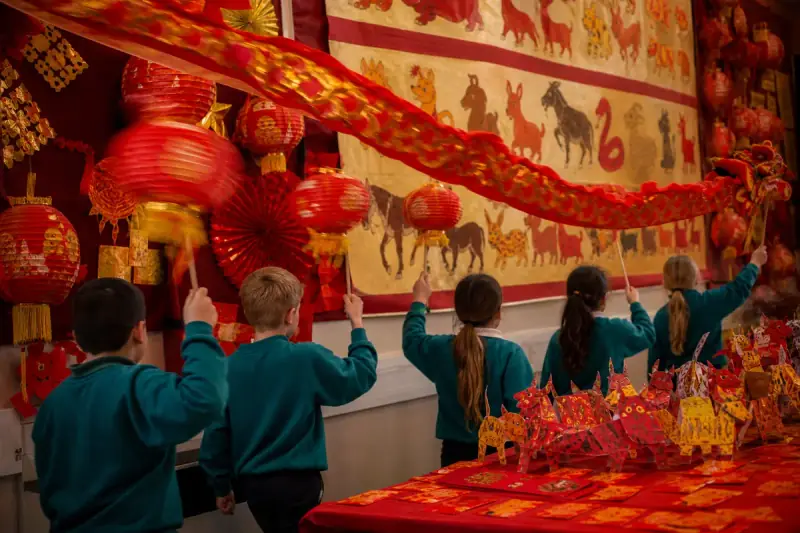
The three things worth teaching at Chinese New Year
Pupils often find the calendar, the zodiac and the journey home the most surprising parts and none of these require any extra class time. Here’s how to teach all three alongside the red paper.
Chinese New Year is the cultural date primary schools feel most confident about, and there is more to teach here than at almost any other point in the calendar. The red paper, the concertina dragon down the corridor and finding out which animal you are get pupils interested; three things turn that interest into a festival they understand. This is a date that empties and refills a country of more than a billion people, and almost all of it costs no extra timetable.
Why the date moves
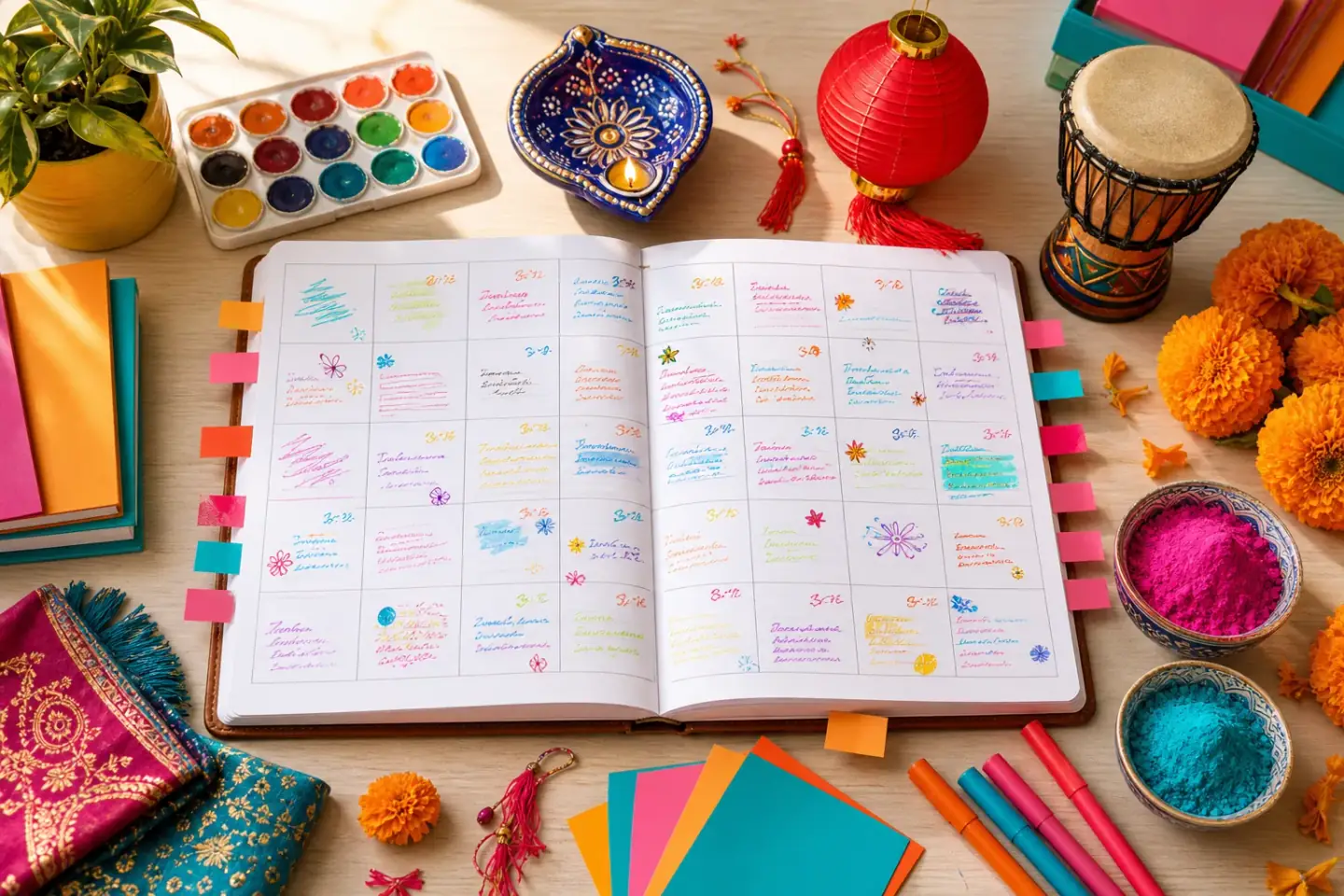
The Chinese calendar is lunisolar: the months follow the moon, and the year is kept in step with the seasons. A lunar month runs about twenty-nine and a half days, so twelve of them fall roughly eleven days short of a solar year, and the fix is an extra month inserted every second or third year. New year begins on the new moon that starts the first month, which puts it somewhere between 21 January and 20 February and moves it by weeks from one year to the next.
That is a KS2 maths and science lesson sitting inside a festival, and it answers the question pupils always ask. It is also worth naming that the same new moon starts the year for families who are not Chinese at all — Tet in Vietnamese households, Seollal in Korean ones. Mentioning both in the newsletter is a small touch that families marking the same day under a different name will notice.
The zodiac animal is not a personality quiz
The twelve animals repeat on a twelve-year cycle, so an animal is first of all a way of naming a year, and by extension a polite way of working out roughly how old somebody is without asking. Paired with a five-element cycle it produces a sixty-year round, which is how dates are given on older objects and in older records. Taught that way, the zodiac becomes a lesson about how a culture organises time, doing the same job as our own decades and centuries and doing it differently.
The folk tale behind the order is worth telling as a folk tale. The animals race to cross a river, the rat rides over on the ox's back and jumps off at the last moment to come first, the pig stops for a meal and arrives last. Pupils enjoy the order and the argument about whether the rat cheated. The horoscope version — being born in a particular year predicting what a person is like — is the one to leave out; the calendar version is far more interesting anyway.
The journey home is the point
The heart of the festival is a meal, and the effort of getting everybody to the table is what makes the date extraordinary. Hundreds of millions of people in China work far from where their parents live. The travel period around new year runs for about forty days and is routinely described as the largest annual human migration on earth. For some people it is the one journey of the year, and some children see a parent at that table for the first time in twelve months.
The days either side have their own logic, all of it teachable. The house is cleaned before new year to sweep the old one out, then not swept on the first day so the new luck stays in. Debts are settled, new clothes are worn, and red envelopes of money pass from older to younger. The colour red and the noise of firecrackers trace back to Nian, the creature the story says they drove off. None of that needs a resource pack; it needs ten minutes of telling before the making starts, which is exactly what a facilitator is there to do.
How to give it the space it deserves
- Find out what you already have. A family in school who travels, cooks or phones home for new year is a better source than anything commercial, and a general invitation rather than a targeted ask is how you find them.
- Use this year's animal and this year's date, checked rather than remembered.
- Hand the calendar to maths or science: moon phases, twenty-nine and a half days, and why an extra month has to be squeezed in.
- Teach the reunion. It is the largest part of the festival and the part pupils find most surprising.
- Let the making come second. A dragon, a paper cut or a painted plate is a good afternoon once the class knows what it is for.
- Give it somewhere to land afterwards: a letter written in the voice of someone travelling home, a comparison with a family occasion pupils already know, a piece on how different cultures mark a new year. Curriculum links and follow-up resources come with the workshop, so the week after is planned before the day arrives.
Pupils remember the dragon. What they still talk about weeks later is the empty chair at the table until somebody gets home.