
December · Christmas
Christmas Bauble Decorating
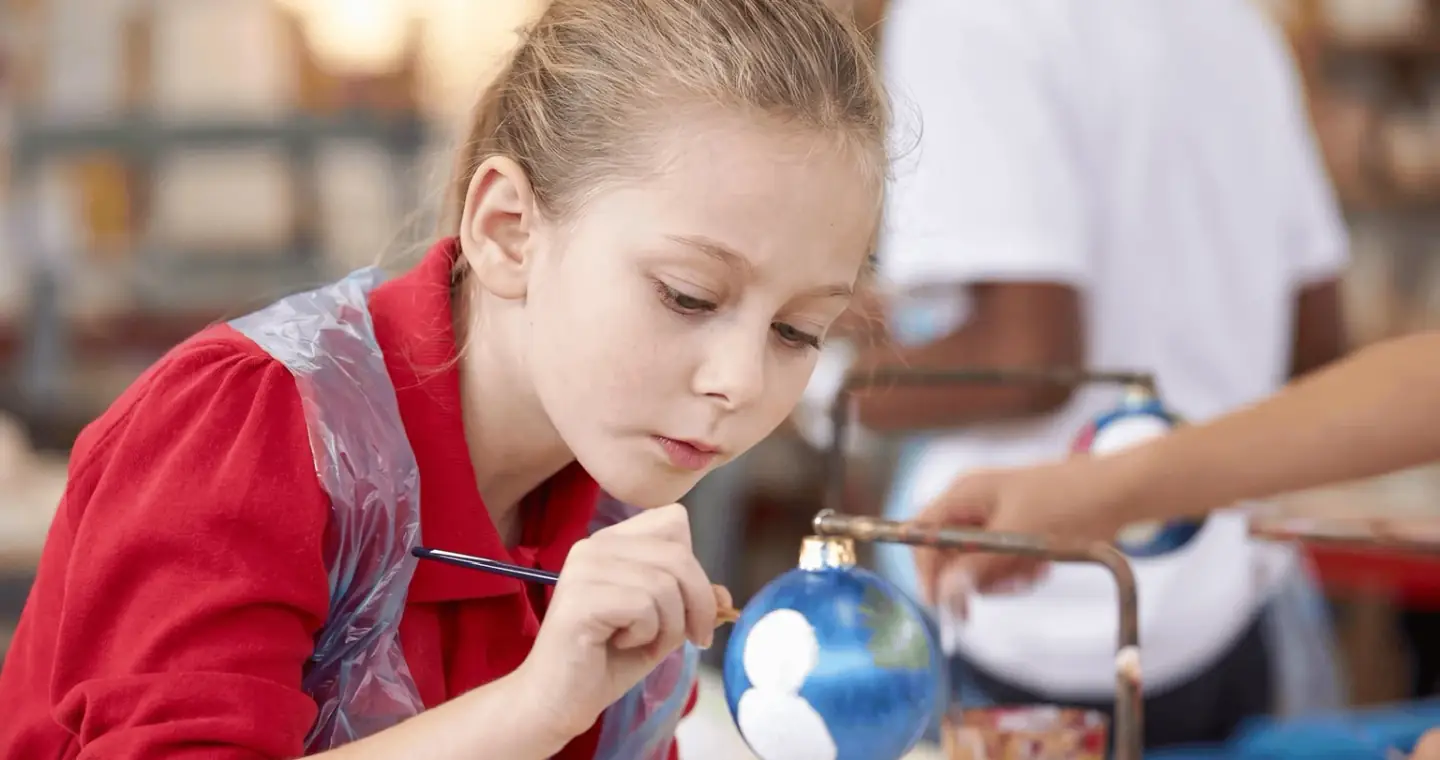
Every child paints and takes home their very own bauble.
- Key stages
- EYFS to KS2
- Session length
- 45–60 minutes per class
- Group size
- Up to 30 pupils per session
- Formats
- Single class, year-group carousel or a full day of six classes
How the session runs
Introduction
Safety, names and a new design
Tables are covered and every pupil has a bauble on a stand, a brush, a pencil and a piece of paper. Names go on the paper, and the facilitator explains how the stand works and how the clip keeps the bauble secure. Pupils who painted one last year are asked what they made then — they are a year older, so this year's is meant to be something new.
The demonstration
Clean brushstrokes
Before anyone starts, the facilitator demonstrates the brushwork on a spare bauble or a paper plate: not too much paint, all the lines and splodges painted out, worked until the surface has a shiny finish. Changing colour is taught here too — a gentle rinse, then dried on the cloth at their place.
The base coat
One colour all over
The first task is a single base colour across the whole bauble, anything but black. Pupils can carefully blow it dry once it is on, which keeps the room busy while the facilitator works round the tables.
The designs
One at a time, demonstrated first
Each design is demonstrated step by step, then attempted: a reindeer, a snowman, a penguin, a Christmas pudding, chosen for the year group. Reception works on reindeer, Year 1 a reindeer and a snowman, Year 2 a snowman and a penguin, Year 3 a penguin and a pudding, and from Year 4 upwards the class or the teacher chooses from all four. A shorter session covers two designs, an hour covers three. The sponge work that shapes each figure is done by adults, not pupils.
The finish
Snow dots and free time
Snow dots or snowflakes finish every bauble, applied with the stick end of the brush for a clean mark. Years 5 and 6 with time to spare get a few minutes of their own — candy canes, stars, holly — to take the design further.
Drying and packing
Bagged and handed over
The baubles stay on their stands somewhere flat for fifteen minutes or more, and each class is boxed and labelled while the next class paints its base coat. We hand the teacher paper takeaway bags so every pupil can carry theirs home safely.
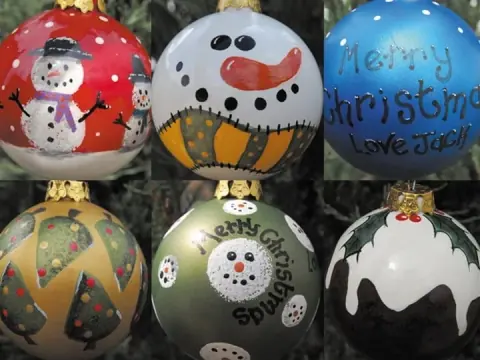
Baubles are on the family Christmas tree by the weekend and back on it each year.
What pupils will learn
- How to paint a small curved surface in a sensible order: base colour first, then the design, then the detail
- Clean brushwork — using the right amount of paint and working the surface until it has a shiny finish
- Brush care: rinsing gently and drying on a cloth so the next colour goes on clean
- Using the stick end of the brush to make clean, even dots
- Building a recognisable figure — a reindeer, snowman, penguin or Christmas pudding — from simple shapes
- Working alongside wet paint without spoiling it, and handling a fragile object with care
- Designing something different from last year's, and judging when a piece is finished rather than overworked
Curriculum links
EYFS to KS2
- Art and Design, KS1
- Develop a wide range of art and design techniques in using colour, pattern, line, shape and form, and use painting to share their own ideas.
- Art and Design, KS2
- Improve mastery of painting technique on a curved surface, building a design in layers from base colour to fine detail.
- PSHE
- Working carefully alongside others on fragile work, following a demonstrated method, and taking pride in something made to be kept.
What we bring
- A bauble and a stand for every pupil, plus spares, because a few get dropped
- Paints, small brushes, pencils and the sponges the facilitator uses to shape each design
- Tablecloths to cover every surface pupils paint on, cloths and kitchen roll for cleaning brushes, and water cups within arm's reach
- Paper takeaway bags for the class, handed to the teacher at the end
- An apron for every child, handed to the organiser at the start of the day
- A DBS-checked facilitator who demonstrates every design before the class attempts it, and who clears the tables afterwards
What we need from you
- Tables the class can sit around, plus floor covering if the room is carpeted
- Pupils arriving with sleeves rolled up, ready to put an apron on
- Access to a sink, or clean water for refilling the cups between classes
- A shelf, trolley or side table where thirty baubles can sit undisturbed for fifteen minutes or more
- The class teacher with the group for the whole session, and fifteen minutes before the first class to lay the tables out
When to book
December
Christmas falls on 25 December every year. We recommend booking by mid-November, as December fills up quickly.
Reviews for our workshop team
What schools say about our Christmas workshops
“What a great experience for the children! Ivan was amazing at keeping their interest and making the drumming session as active and exciting as possible.”
Demelza Jones “A great workshop. Fantastic resources and Chris was great with the children. They were engaged throughout and talked about it for ages afterwards. This is the third time we have used them and they never disappoint!”
Julie Gill “Fantastic workshops for primary school children - the facilitators Emma for African drumming and Naomi for dance workshops were friendly, skilled and provided a very enjoyable experience for the children. Thank you!”
Aleksandra Dass “We have had a number of experiences from the Education Group and are always impressed by the quality of the workshops. We return to them time after time because we know that the planning, content and age-appropriateness of their sessions are absolutely right for the children.”
Kate Baguley “Our infant school aged pupils enjoyed the Maypole experience and were amazed to see the maypole in the middle of their playground. The teacher was fantastic with our young children and we all managed to come away from our sessions feeling we had learnt something rather wonderful!”
St Peter's “Highly recommend the African mask workshop! It's one of the highlights of the Year 5 calendar. Well worth every penny”
Joanne Netto
Questions schools ask
How does the bauble stay still while they paint?
Every bauble sits on its own stand, held by a clip, so pupils are not holding wet paint while they work. The facilitator explains how it works at the start of the session, and we bring spares in case one gets dropped.
How long do they take to dry?
Fifteen minutes or more on the stand, somewhere flat and out of the way — which is why we ask for a shelf or trolley. We box and label each class while the next one is painting its base coat, and hand the teacher paper takeaway bags so they can go home the same day.
Can the baubles go to our winter fair instead of home?
Yes. Tell us at booking that the work is for a fair and we will box each class separately and labelled, so the baubles arrive on the stall sorted rather than mixed together.
How many adults do we need in the room?
The facilitator plus the class teacher is enough for a class of thirty. An extra pair of hands helps at the sponging stage, since that part is done by adults rather than pupils — for KS1 especially, a TA or parent helper makes it noticeably calmer.
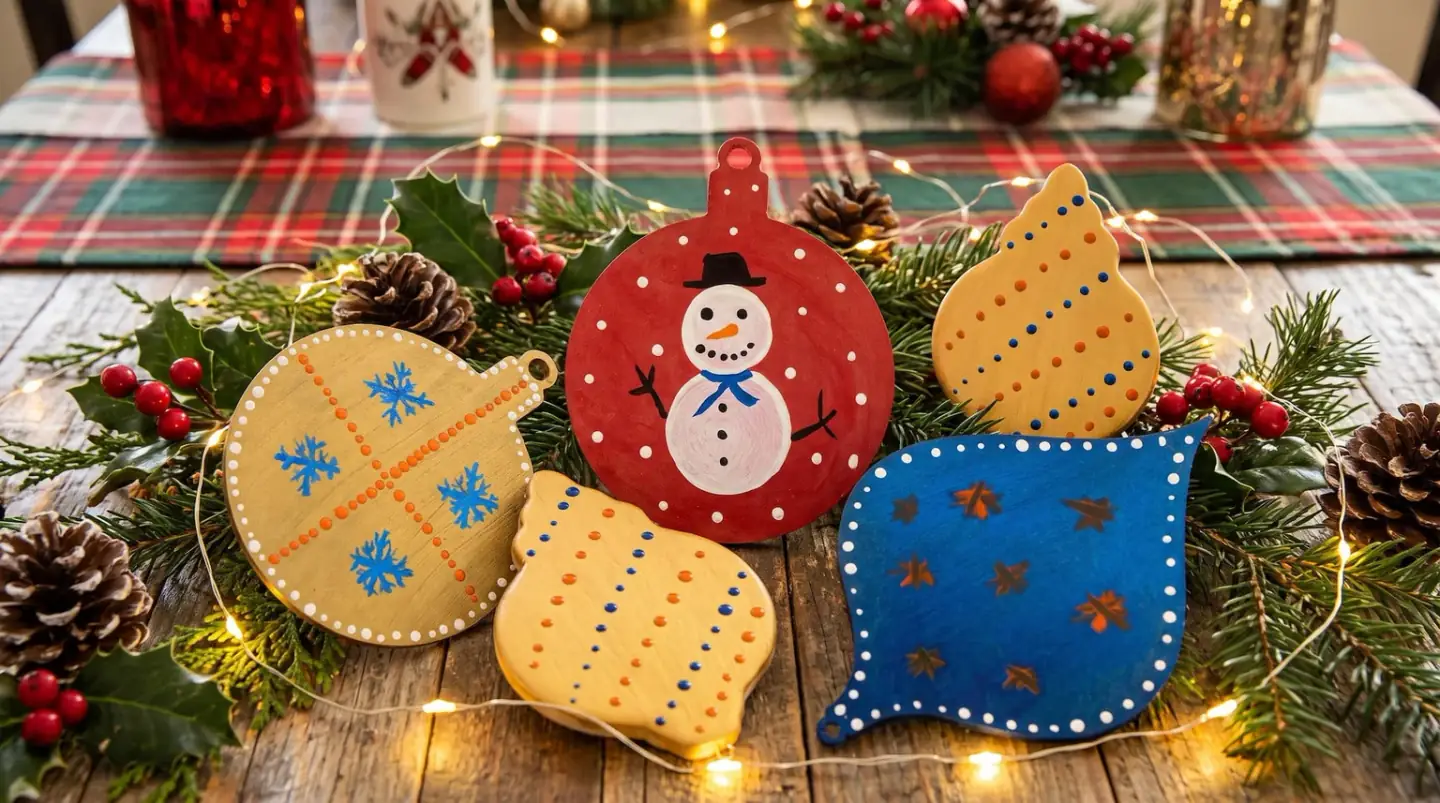
Every child paints and takes home their very own bauble.
Tell us the date you have in mind and we'll come back within one working day with options for your school.