
Oct / Nov · Diwali
Bollywood Dance
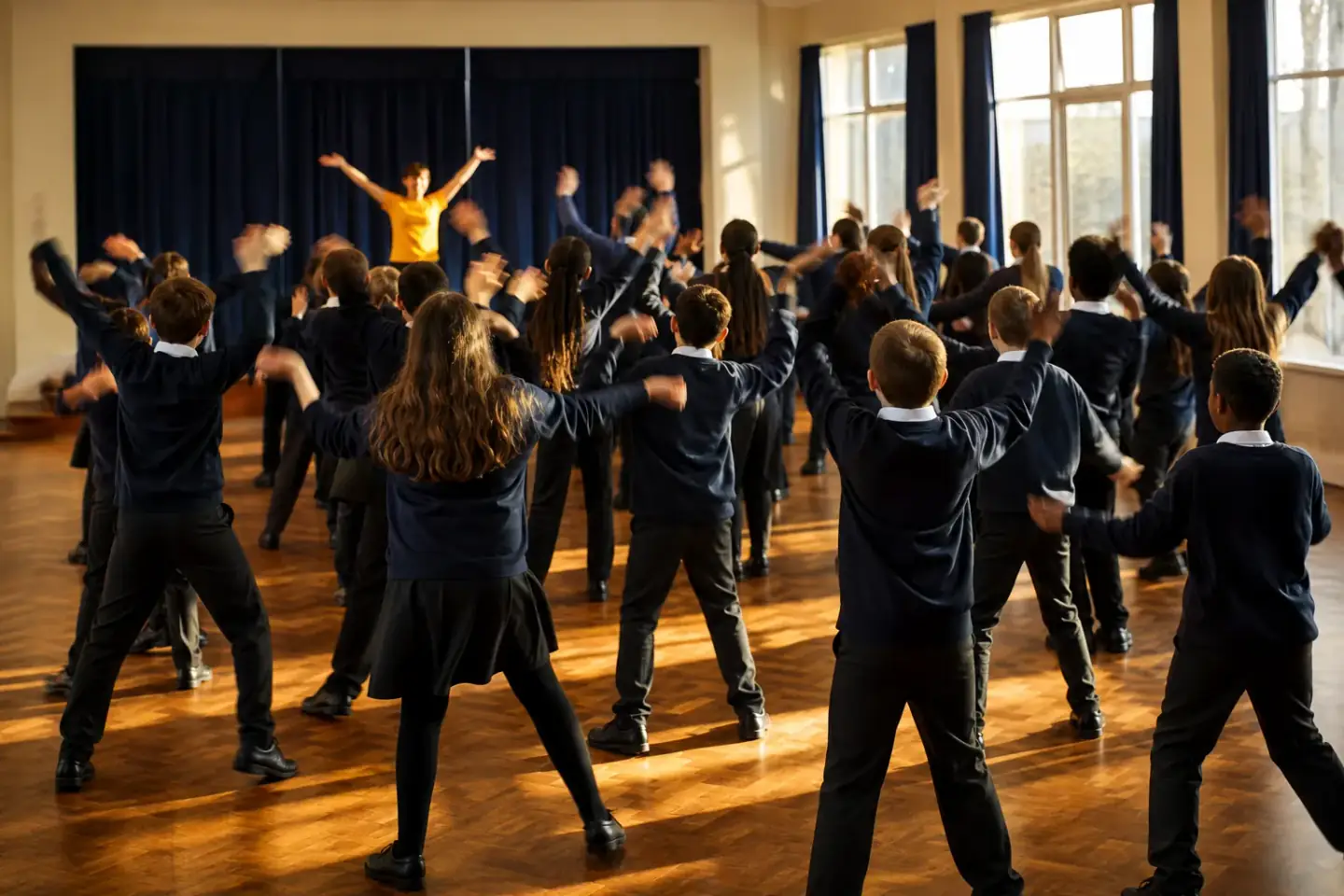
Expressive, theatrical and full of rhythm — pupils build their own Bollywood-inspired sequence and perform it.
- Key stages
- EYFS to KS2
- Session length
- 45–60 minutes per session
- Group size
- Up to 30 per class, working in pairs and small groups
- Formats
- Class sessions, a year-group session, or a full day with a showcase
How the session runs
Introduction
What Bollywood actually is
A map of India goes up alongside photographs from Bollywood films, and the facilitator makes the key point early: this is a diverse fusion style, not one traditional Indian dance form. Pupils get the vocabulary they will use all hour — Bollywood, mudra, expression, rhythm, choreography, fusion — and talk about how dance, music and storytelling work together in a film.
Warm-up
Head, shoulders, wrists, feet
Bollywood music goes on and the class warms up gently before the intensity builds: head, shoulder, wrist and arm movements, side steps, knee bends and rhythmic footwork, then simple hand gestures and changes of direction. Facial expression is warmed up too — pupils try movements that communicate different emotions, which is what stops the expression work feeling awkward later.
Explore movement
Expression, gesture and rhythm
The class learns simple Bollywood-inspired movement with the emphasis on strong rhythmic patterns and clear musicality: expressive arms and hands, changes of level, direction and speed, theatrical performance, and combinations that repeat. Mudra-inspired hand gestures come in here, with the facilitator explaining honestly that authentic mudras carry specific meanings and that this is an introduction to them, not the teaching of a classical form.
Create and practise
Their own sequence
In pairs or small groups pupils build a short Bollywood-inspired sequence from the movements they have explored, with a beginning, a middle and an end, and changes of direction or formation. Groups add their own gestures and expressions while staying in time with the music, and the facilitator adjusts speed and complexity to the age and ability of the class.
Performance
Perform it
Groups perform for one another, or the class dances a final sequence together. The facilitator asks for confident, expressive performance and respectful watching — and asks the audience to point out where they can see rhythm, gesture, expression and choreography in what they have just watched.
Cool down
Stretch and reflect
Gentle movements and stretches to finish, then pupils reflect on their own or with a partner: what they learned about Bollywood and Indian dance, which movement or gesture they enjoyed, what a mudra is, how a dancer uses facial expression to tell a story, and why Bollywood dance is described as a fusion style.
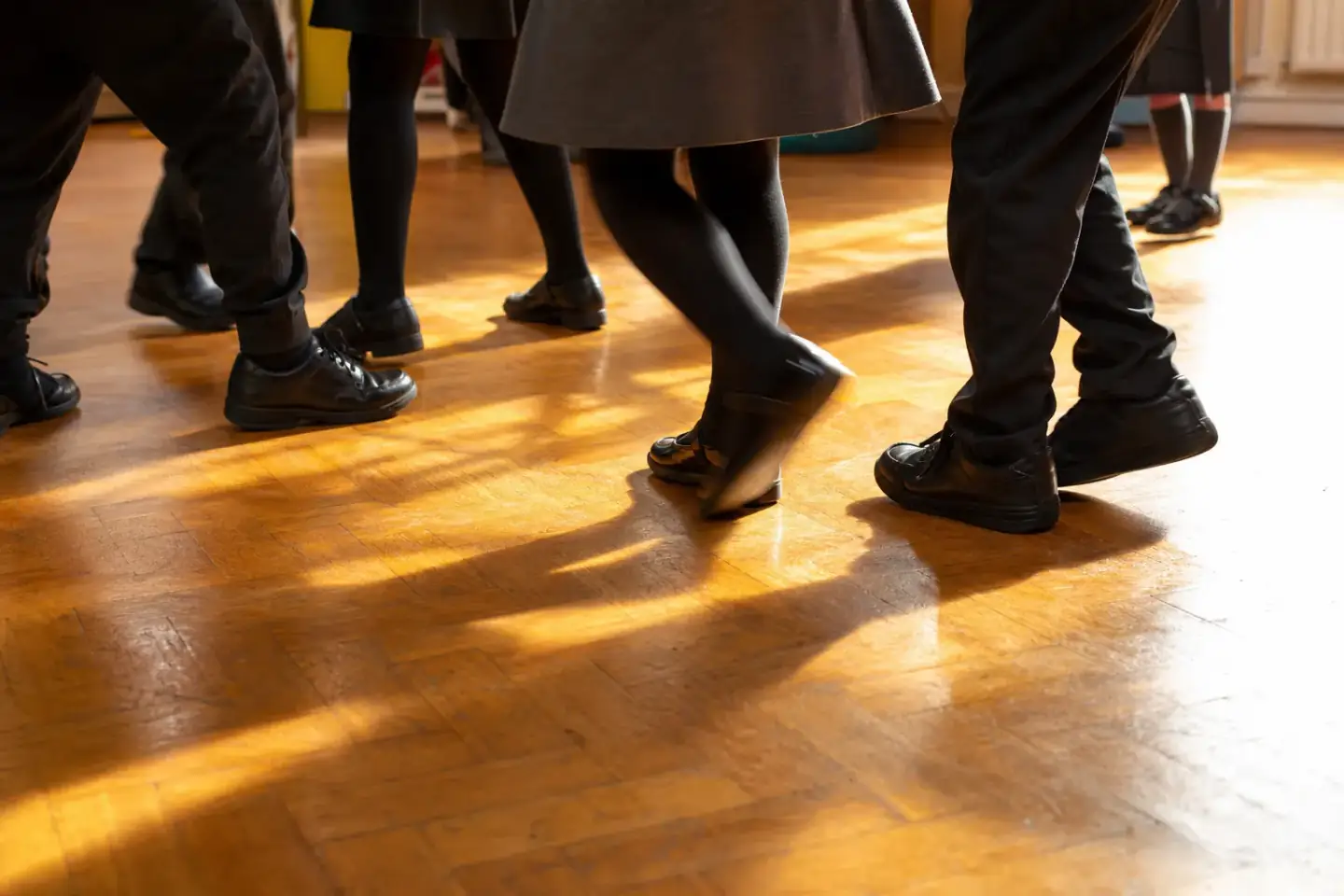
The face is part of the dance.
What pupils will learn
- That Bollywood is the Hindi-language film industry based mainly in Mumbai, India
- That Bollywood dance is a fusion of traditional Indian dance, folk dance and international styles including jazz, hip hop and contemporary
- That Indian classical forms, Kathak and Bharatanatyam among them, have shaped Bollywood choreography
- Why the style is energetic, expressive and theatrical, and how storytelling, facial expression, gesture and rhythm work together in it
- That songs and dances in Indian films move the story forward or show what a character is feeling
- The vocabulary — Bollywood, mudra, expression, rhythm, choreography and fusion — learned while dancing
- That authentic mudras carry specific meanings, and that this session introduces them rather than teaching a classical form
- How choreography uses groups, formations, repetition and changes of direction, and how to build a sequence with a beginning, middle and end
Curriculum links
EYFS to KS2
- Dance within PE, KS1
- Perform dances using simple movement patterns, moving in time with the music and with a partner.
- Dance within PE, KS2
- Perform dances using a range of movement patterns, creating and refining a short sequence in a small group with changes of direction and formation.
- Music, KS2
- Listen with attention to detail to music from a tradition beyond the pupils' own, and identify the rhythm that the movement is built on.
- Drama and PSHE
- Using facial expression and gesture to communicate a feeling, a character or an idea, and performing to peers who watch respectfully.
What we bring
- A DBS-checked facilitator who works in this style and is used to teaching a full class from scratch
- Age-appropriate Bollywood music with a clear beat and accessible choreography, screened for lyrics and themes, and speakers if you would rather not use your own
- A map of India and photos for the introduction, plus examples of the Indian dance forms Bollywood draws on
- Nothing for pupils to wear — PE kit and plimsolls or trainers are all this needs
What we need from you
- A hall or open space with a clear, dry floor and enough room for groups to move and change direction
- Pupils in PE kit with trainers or plimsolls
- A teacher or teaching assistant present for the whole session, and ideally joining in at the back
- A socket for the speakers, a screen or board if you would like the map and clips shown large, and fifteen minutes before the first group
- A note in advance of any pupil who needs a seated or adapted version, so the movements are planned around them
When to book
Oct / Nov
Diwali follows the lunar calendar and typically falls in October or November. Exact dates change each year — we'll confirm the nearest date when you book.
Reviews for our workshop team
What schools say about our Diwali workshops
“Fantastic workshops for primary school children - the facilitators Emma for African drumming and Naomi for dance workshops were friendly, skilled and provided a very enjoyable experience for the children. Thank you!”
Aleksandra Dass “We have had a number of experiences from the Education Group and are always impressed by the quality of the workshops. We return to them time after time because we know that the planning, content and age-appropriateness of their sessions are absolutely right for the children.”
Kate Baguley “Our infant school aged pupils enjoyed the Maypole experience and were amazed to see the maypole in the middle of their playground. The teacher was fantastic with our young children and we all managed to come away from our sessions feeling we had learnt something rather wonderful!”
St Peter's “Highly recommend the African mask workshop! It's one of the highlights of the Year 5 calendar. Well worth every penny”
Joanne Netto “What a great experience for the children! Ivan was amazing at keeping their interest and making the drumming session as active and exciting as possible.”
Demelza Jones “A great workshop. Fantastic resources and Chris was great with the children. They were engaged throughout and talked about it for ages afterwards. This is the third time we have used them and they never disappoint!”
Julie Gill
Questions schools ask
Is Bollywood dance a traditional Indian dance form?
No, and the facilitator says so in the first five minutes. Bollywood is a fusion: Indian classical forms such as Kathak and Bharatanatyam, Indian folk dance, and international styles including jazz, hip hop and contemporary. Teaching it as though it were one traditional form would give pupils the wrong idea about both Bollywood and the traditions behind it.
Do pupils learn real mudras?
They learn mudra-inspired hand gestures, and the facilitator is explicit about the difference. Authentic mudras carry specific meanings within classical Indian dance, and an hour is an introduction to that idea rather than the teaching of a classical form. Pupils leave knowing what a mudra is and that there is a great deal more to it.
What music do you use, and can we check it first?
Age-appropriate Bollywood tracks with a clear beat and choreography a class can actually follow, screened for lyrics and themes. We will send the shortlist before your date so you can approve it, and we are happy to swap a track if you would rather.
What about pupils who do not want to dance?
Groups build their own sequences, so there is no solo and no spotlight, and a pupil can contribute ideas and gestures to their group before joining in fully. Anyone who would rather watch can be part of the audience task instead, spotting rhythm, gesture and expression in the other performances.
Do you bring costumes for pupils?
No. Pupils dance in PE kit. The facilitator may work in performance costume and will explain what it is, but putting a class into another culture's clothing is not something we do.
How is this different from your Indian Dance session?
Indian Dance works inside the classical and folk traditions themselves. Bollywood is the film industry's fusion style — expressive, theatrical and drawing on those traditions alongside jazz, hip hop and contemporary. Schools booking a full day often run both, which makes the relationship between them obvious to pupils.
The other Diwali sessions
All of Diwali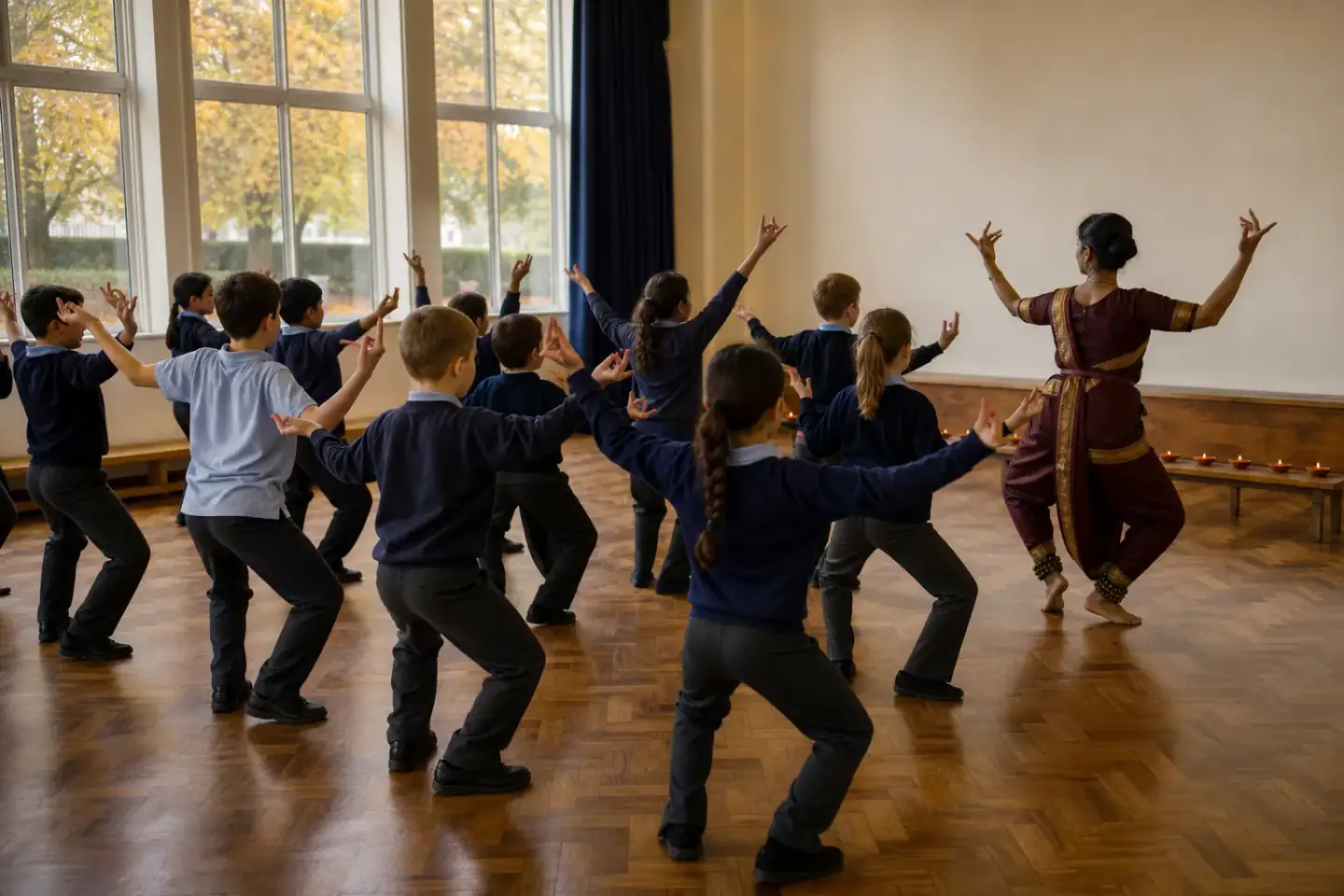
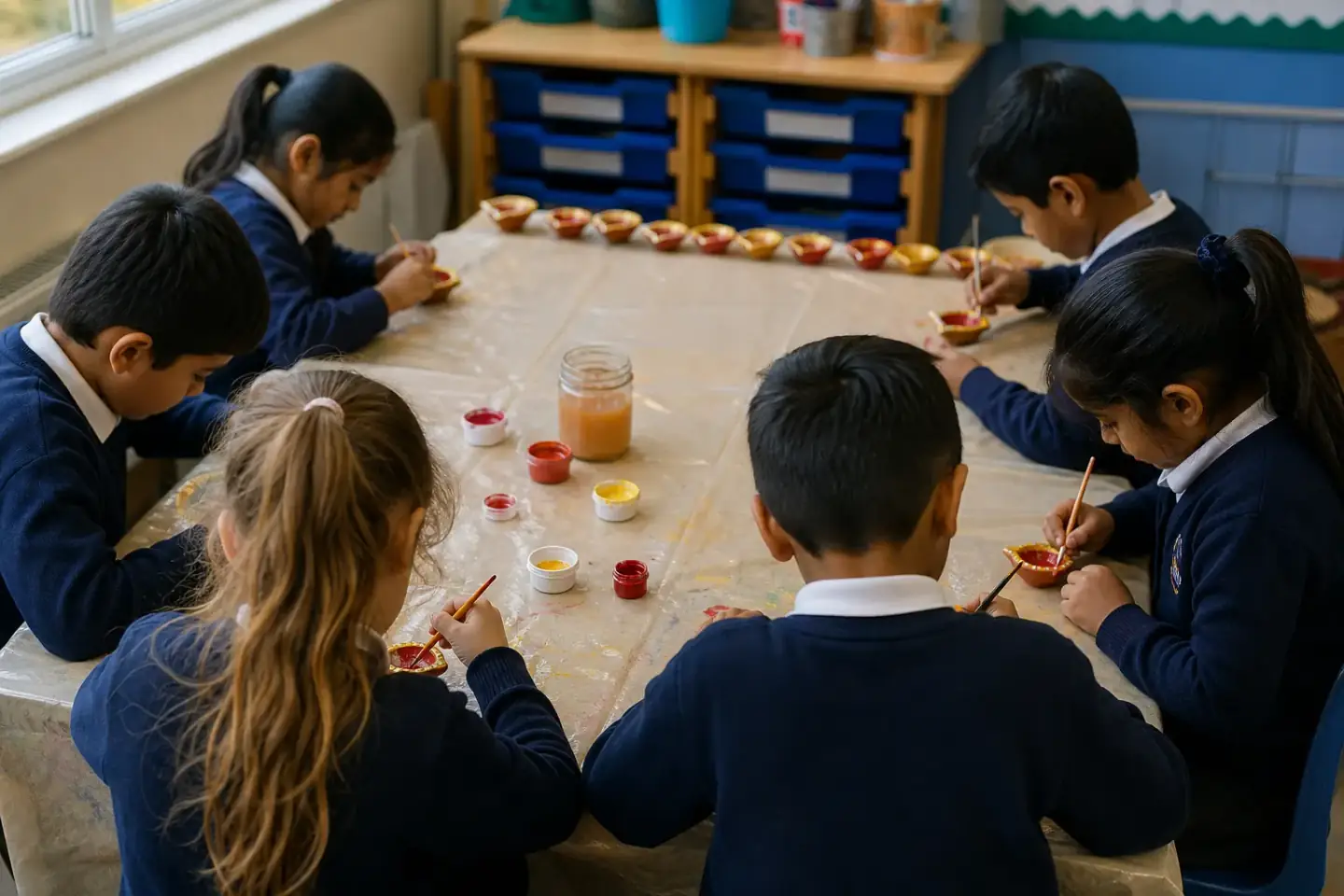
Expressive, theatrical and full of rhythm — pupils build their own Bollywood-inspired sequence and perform it.
Tell us the date you have in mind and we'll come back within one working day with options for your school.