
21 May · Cultural Diversity
Indian Dance
Express yourself through the graceful moves and rich traditions of Indian dance.
- Key stages
- EYFS to KS2
- Session length
- 45–60 minutes per class
- Group size
- Up to 30 pupils per class, or 60 in a hall
- Formats
- Assembly, half day or full day with a showcase
How the session runs
Introduction
Many traditions, not one
A map of India and photographs of dancers go up first, and pupils learn that the country holds many dance traditions rather than a single style — each region with its own music, costume and movement. The facilitator introduces the words the session will use and shows how hands, face and feet each carry meaning.
Warm-up
Into the music
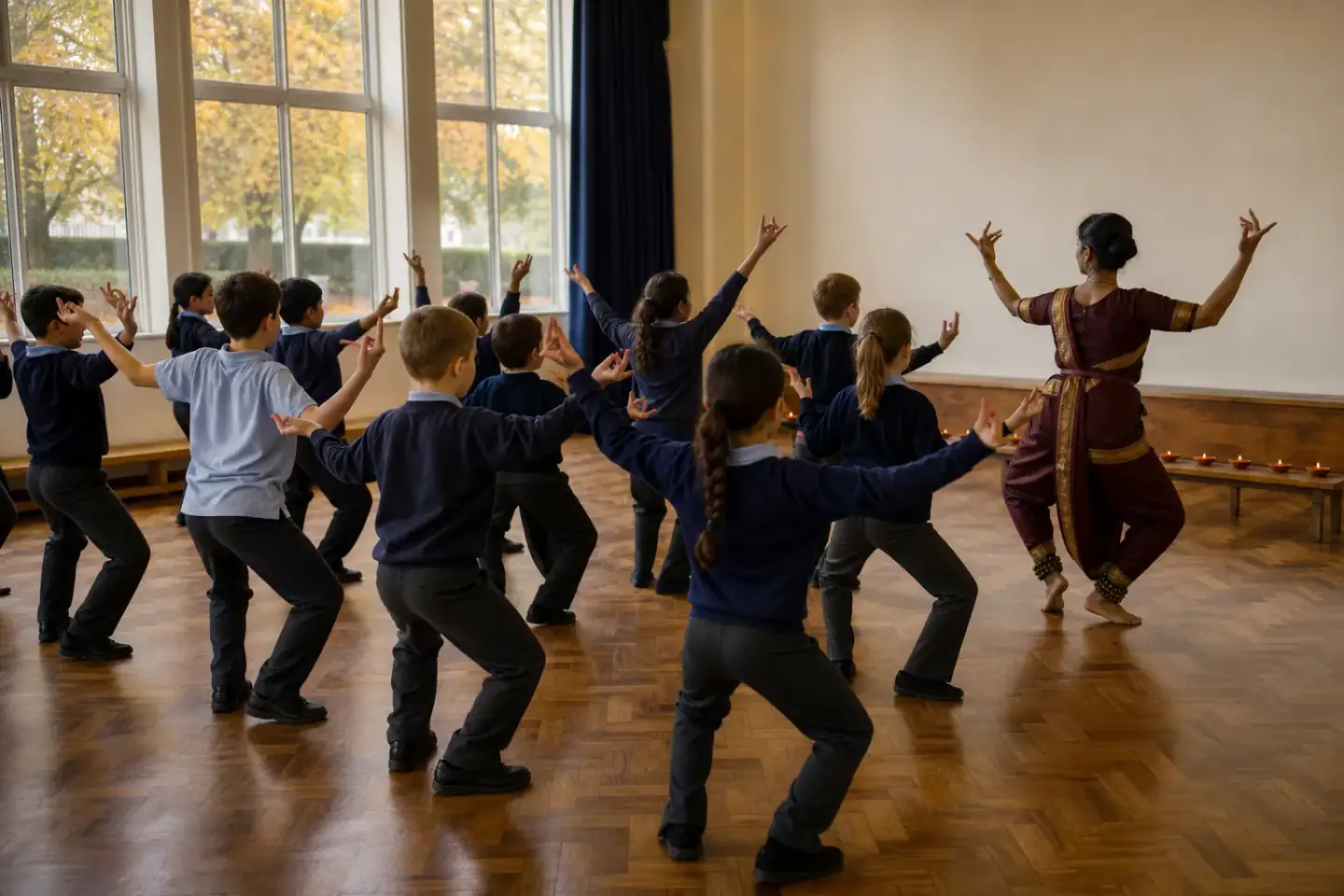
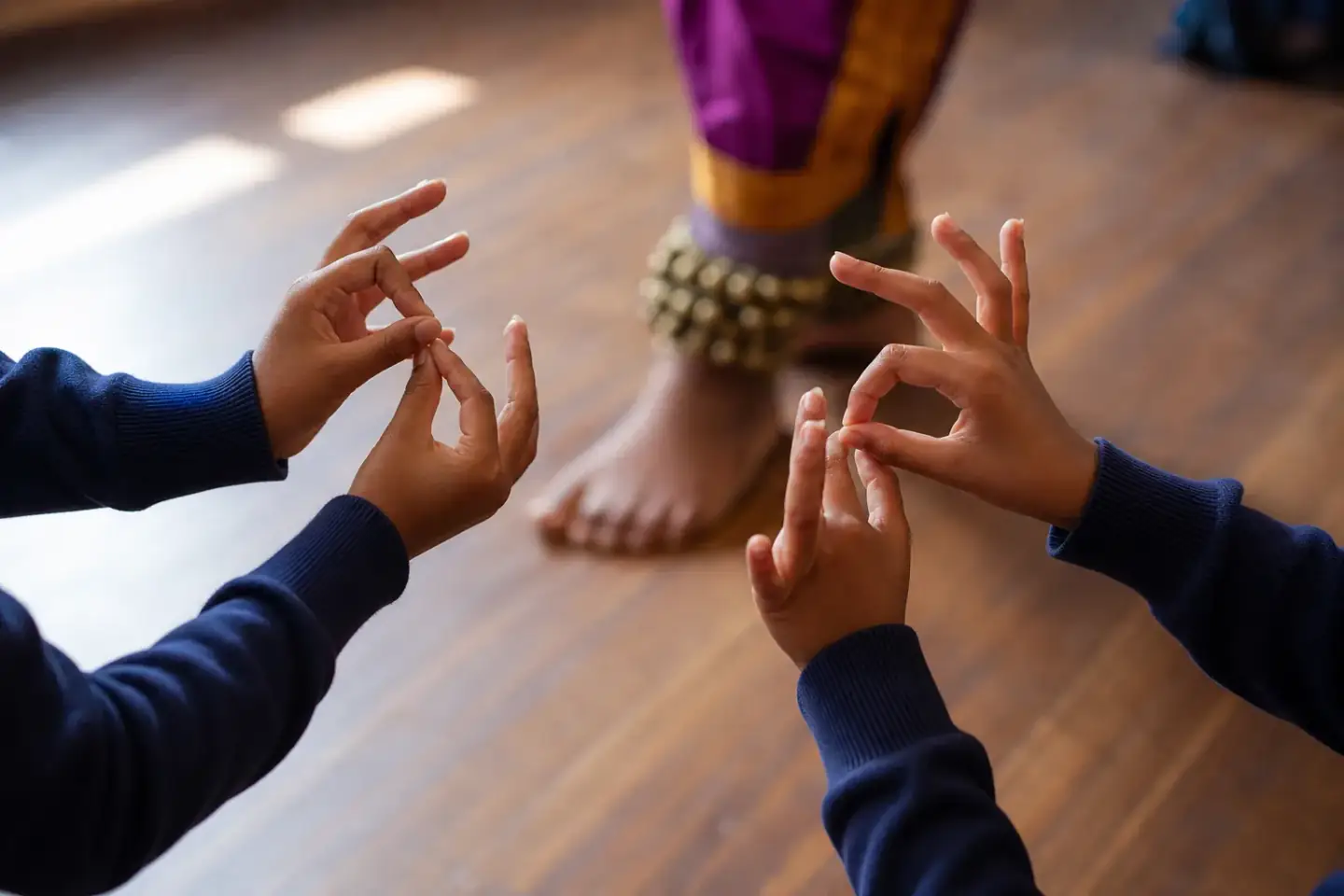
Indian music goes on and the class warms up gently, building as it goes: head, shoulder, arm and wrist isolations, stretches, then simple rhythmic stepping and stamping. Basic hand gestures come in here, along with mirroring work in pairs using gesture and expression, so pupils are reading each other before anything is taught formally.
Explore Indian dance
Hands, feet and face
Pupils learn simple movements drawn from an Indian dance tradition: footwork answering the beat, hand gestures and expressive arms, facial expression used to tell a story, and changes of level and direction. Younger classes work through animal, nature and character themes; older pupils take on more detailed rhythmic patterns, gestures and storytelling.
Create and practise
Their own sequence
Groups build a short sequence from what they have learned, combining footwork, gesture and expression, and inventing their own movements to communicate an emotion, a character or part of a story.
Performance
Perform it
Groups perform their sequences for one another, or the class dances together as one. Clear rhythm, expressive movement and confident gesture are what the facilitator draws out, and where it fits, the cultural inspiration behind the dance is explained before the performance begins.
Cool down
Stretch and reflect
Gentle stretches and slower movement to finish, then pupils reflect: what they learned about Indian dance, what a mudra is, how dance can carry a story or an emotion, and what they enjoyed most. At Diwali they also talk about what the Festival of Lights means to different communities.
By the end of the session, pupils can read a story in each other's hands.
What pupils will learn
- That India holds a wide range of dance traditions, with different regions carrying their own styles, music, costumes and movement
- The recognised classical forms by name — Bharatanatyam, Kathak, Kathakali, Odissi and Manipuri
- How Indian dance communicates stories, emotions, characters and cultural tradition through movement, facial expression and hand gesture
- Mudra, tala, abhinaya, bhangra and Bollywood — the vocabulary, learned while dancing rather than written down
- Rhythmic footwork answering the beat, expressive arms, changes of level and direction, and the coordination repetition builds
- Creating and practising a short sequence in a group, then performing it with clear rhythm and confident gesture
- How Indian dance has shaped contemporary dance, Bollywood choreography and other popular performance styles
- For sessions in October and November: what Diwali celebrates, the themes of light over darkness and good over evil, and that communities mark it in different ways
Curriculum links
EYFS to KS2
- Dance within PE, KS1
- Pupils perform dances using simple movement patterns, and develop coordination, control and balance inside a taught sequence or a circle formation.
- Dance within PE, KS2
- Pupils perform dances using a range of movement patterns, refining timing, shape and clarity, and switching between two contrasting styles inside one piece.
- Music, KS2
- Listen with attention to detail to music from a tradition beyond their own, and work out how a rhythmic cycle is structured, repeated and answered in movement.
- RE, agreed syllabus
- Belief and practice through festival: what Diwali celebrates, the symbolism of light over darkness, and the fact that Hindu, Jain, Sikh and some Buddhist communities each mark it in their own way.
- PSHE and British Values
- Mutual respect: treating a classmate's family tradition as current practice that anybody can join, rather than as a performance to watch.
What we bring
- A DBS-checked facilitator trained in Indian dance and used to full primary classes
- Music chosen to suit the style being taught, plus a portable speaker if you would rather not use your own
- A map of India, photographs of Indian dance styles, rangoli pattern examples and images of diyas
- Scarves used as props within the dance, rather than costume handed to pupils to wear
What we need from you
- A hall or studio with a swept, clear floor and room for the class to spread out, or for a ring of thirty to turn
- Pupils in PE kit, barefoot if the floor allows it — the footwork is danced flat, and trainers or plimsolls suit the folk sections that bounce on the ball of the foot
- A member of school staff in the room for the whole session, as your safeguarding policy requires
- A socket within reach of the floor, and fifteen minutes before the first group to set up
- A screen or board if you would like the map and photographs shown large to the class
When to book
21 May
World Day for Cultural Diversity for Dialogue and Development is a fixed date: 21 May every year.
Reviews for our workshop team
What schools say about our Cultural Diversity workshops
“Our infant school aged pupils enjoyed the Maypole experience and were amazed to see the maypole in the middle of their playground. The teacher was fantastic with our young children and we all managed to come away from our sessions feeling we had learnt something rather wonderful!”
St Peter's “Highly recommend the African mask workshop! It's one of the highlights of the Year 5 calendar. Well worth every penny”
Joanne Netto “What a great experience for the children! Ivan was amazing at keeping their interest and making the drumming session as active and exciting as possible.”
Demelza Jones “A great workshop. Fantastic resources and Chris was great with the children. They were engaged throughout and talked about it for ages afterwards. This is the third time we have used them and they never disappoint!”
Julie Gill “Fantastic workshops for primary school children - the facilitators Emma for African drumming and Naomi for dance workshops were friendly, skilled and provided a very enjoyable experience for the children. Thank you!”
Aleksandra Dass “We have had a number of experiences from the Education Group and are always impressed by the quality of the workshops. We return to them time after time because we know that the planning, content and age-appropriateness of their sessions are absolutely right for the children.”
Kate Baguley
Questions schools ask
Do pupils need any dance experience?
No. Everything is taught in pieces — a hand shape, then a step, then the two together — and the movements are short and repeat, so they are quick to pick up. A class that has never danced before still finishes with a sequence of their own to perform.
Does the session change depending on the day we book it for?
The shape of the hour stays the same and the emphasis follows the date. Sessions in October and November give Diwali particular weight — the festival is introduced properly, and the sequence pupils build is inspired by light and celebration. At other points in the year the hour stays on the dance itself: the traditions, the vocabulary and the sequence. Tell us the date when you book and the facilitator plans for it.
Do pupils wear Indian dress?
No, and we would not ask them to. Pupils dance in PE kit. The facilitator works in proper practice dress and explains what it is and when a dancer would wear it, which is a far more useful lesson than handing out costumes. The scarves used in the session are props within the dance rather than clothing handed to a class.
Can pupils who cannot stand for long take part?
Yes. The gestures, the expression work and the rhythm patterns all sit in the upper body and can be danced seated, and a seated pupil works within the group rather than at the edge of it. Movements and language are simplified for younger children and for SEN pupils — tell us about the class when you book so it is planned rather than improvised.
We are booking this for Holi — is any colour powder used?
None at all. The dance runs indoors on your hall floor and leaves it clean. The colour is a separate thing: you order a Holi colour run kit and your own staff run it outdoors on a morning that suits you. Plenty of schools take the dance in the morning and the course on the field after lunch.
How is this different from your Bollywood session?
This one works in Indian dance traditions themselves — gesture, rhythmic footwork and expression — and it is quieter and more precise, with pupils creating their own sequence. Bollywood is film-song choreography at high energy for a much bigger group. Schools booking a full day often run both, one after the other.
Will pupils be asked to demonstrate their own family's dancing?
Only if they offer. The invitation is made to the whole room near the end, some classes take it up and some do not, and no pupil is asked to speak for a culture they happen to belong to.
The other Cultural Diversity sessions
All of Cultural Diversity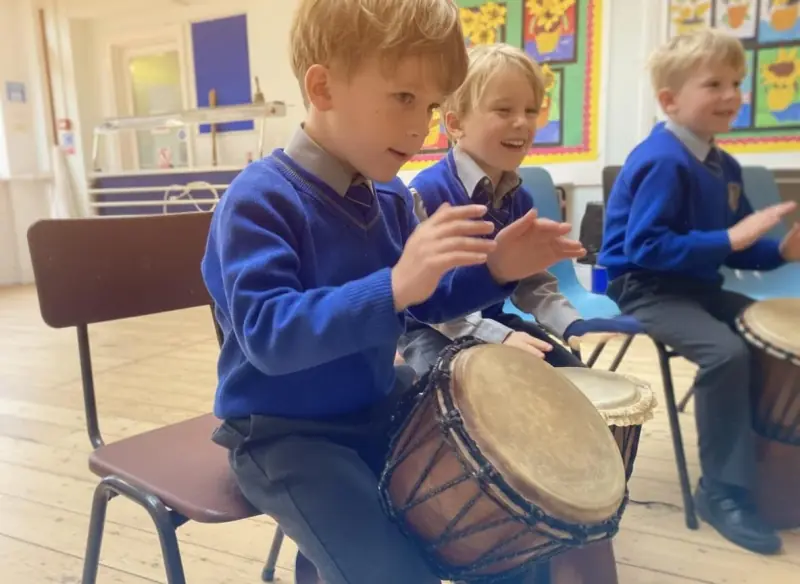 45–60 minutes per classAfrican DrummingThirty pupils, thirty drums, one rhythm.See the session
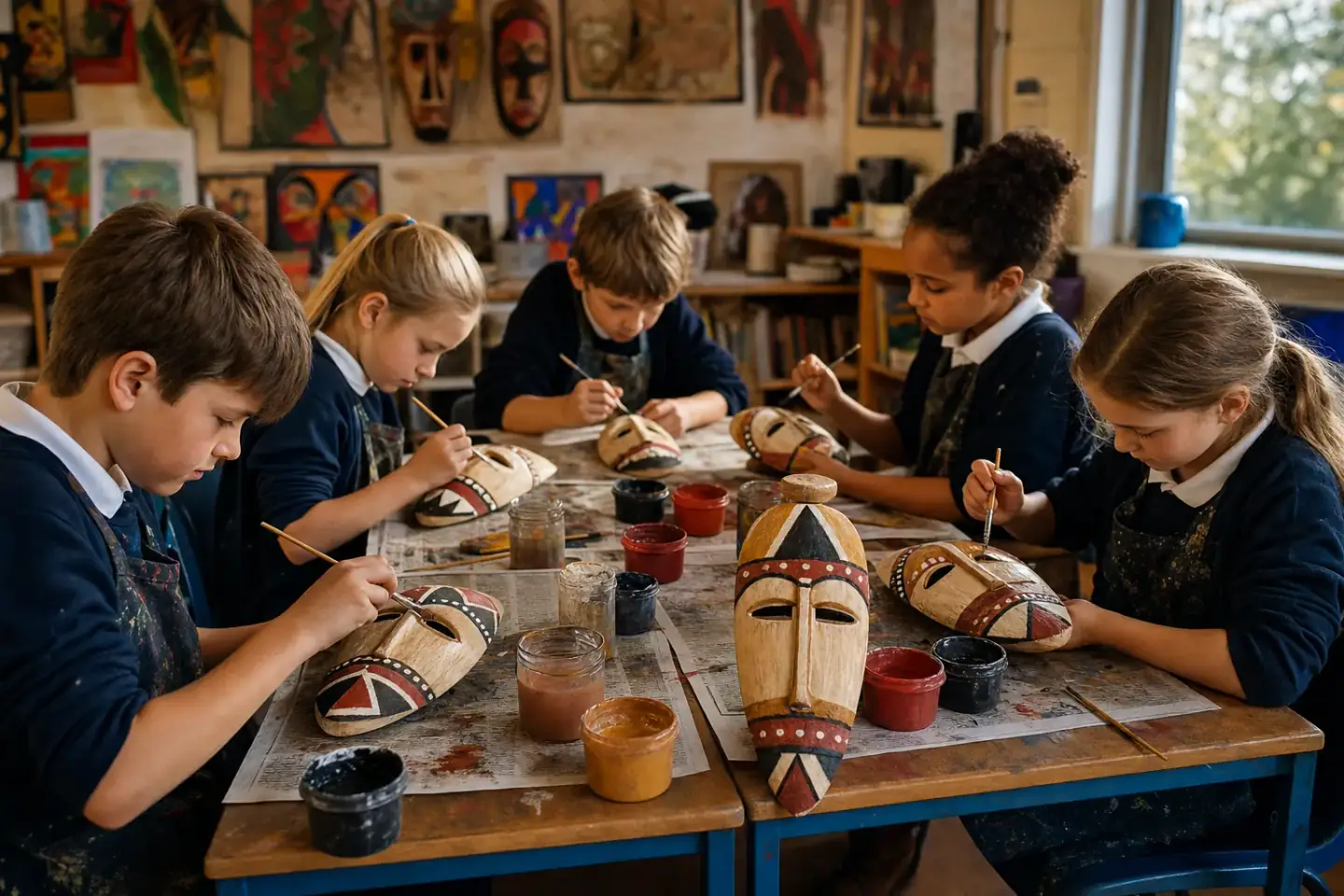 60–90 minutes per classAfrican Mask PaintingCreate African masks with intricate geometric designs.See the session
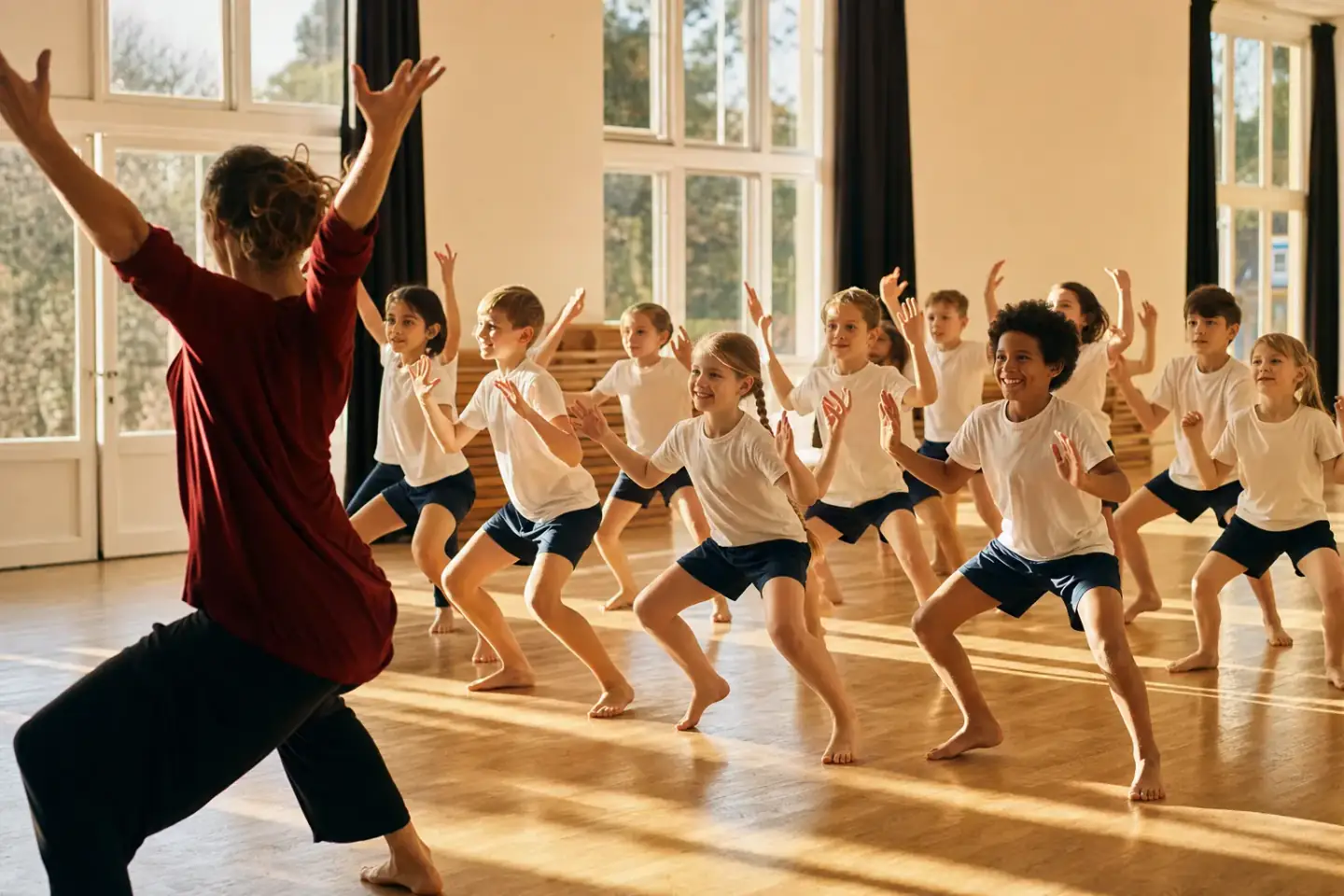 45–60 minutes per classAfrican DanceDiscover African history and culture through authentic dance.See the session
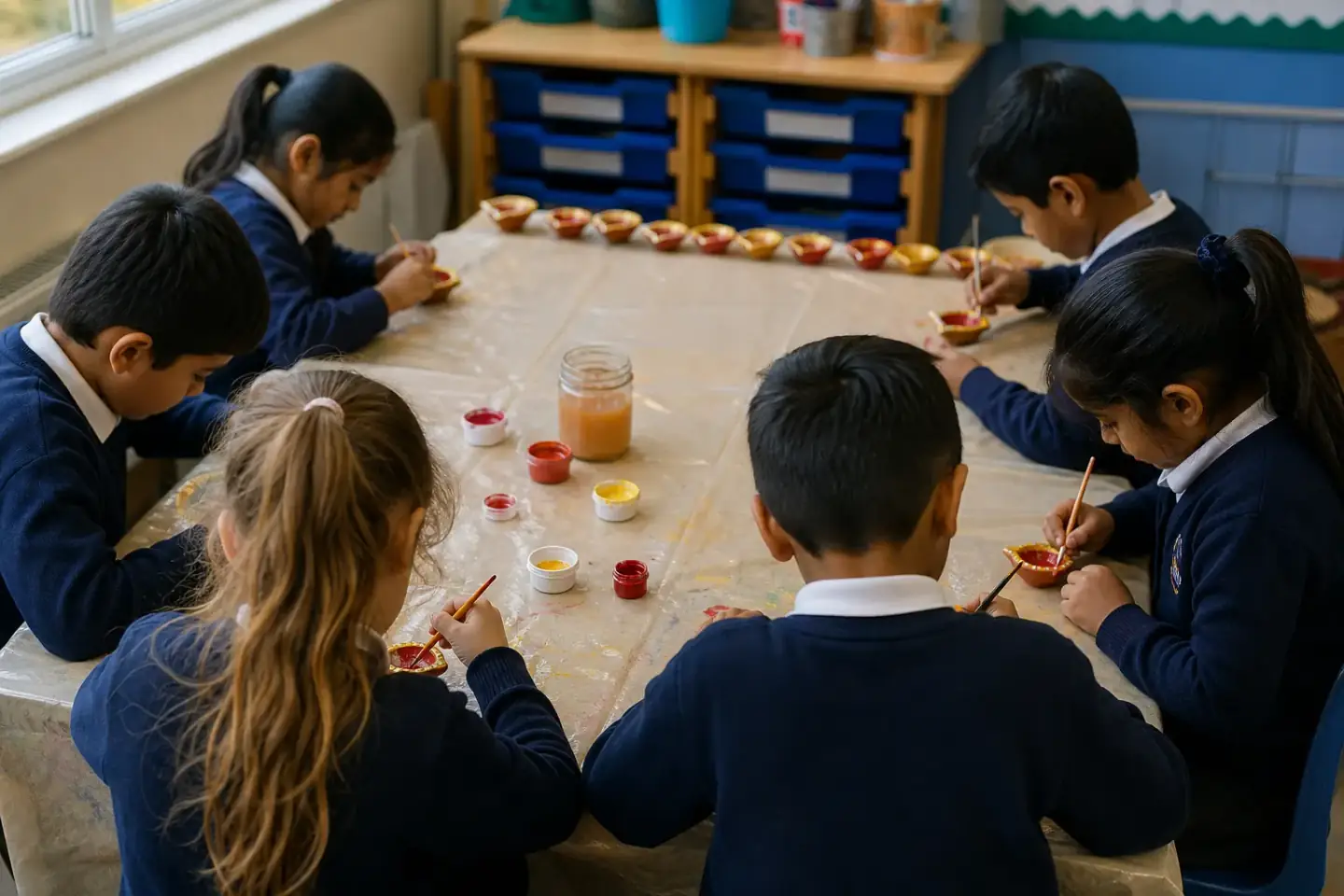 60–90 minutes per classDiya PaintingAdd your personal touch to the festival with a creative diya painting experience.See the session
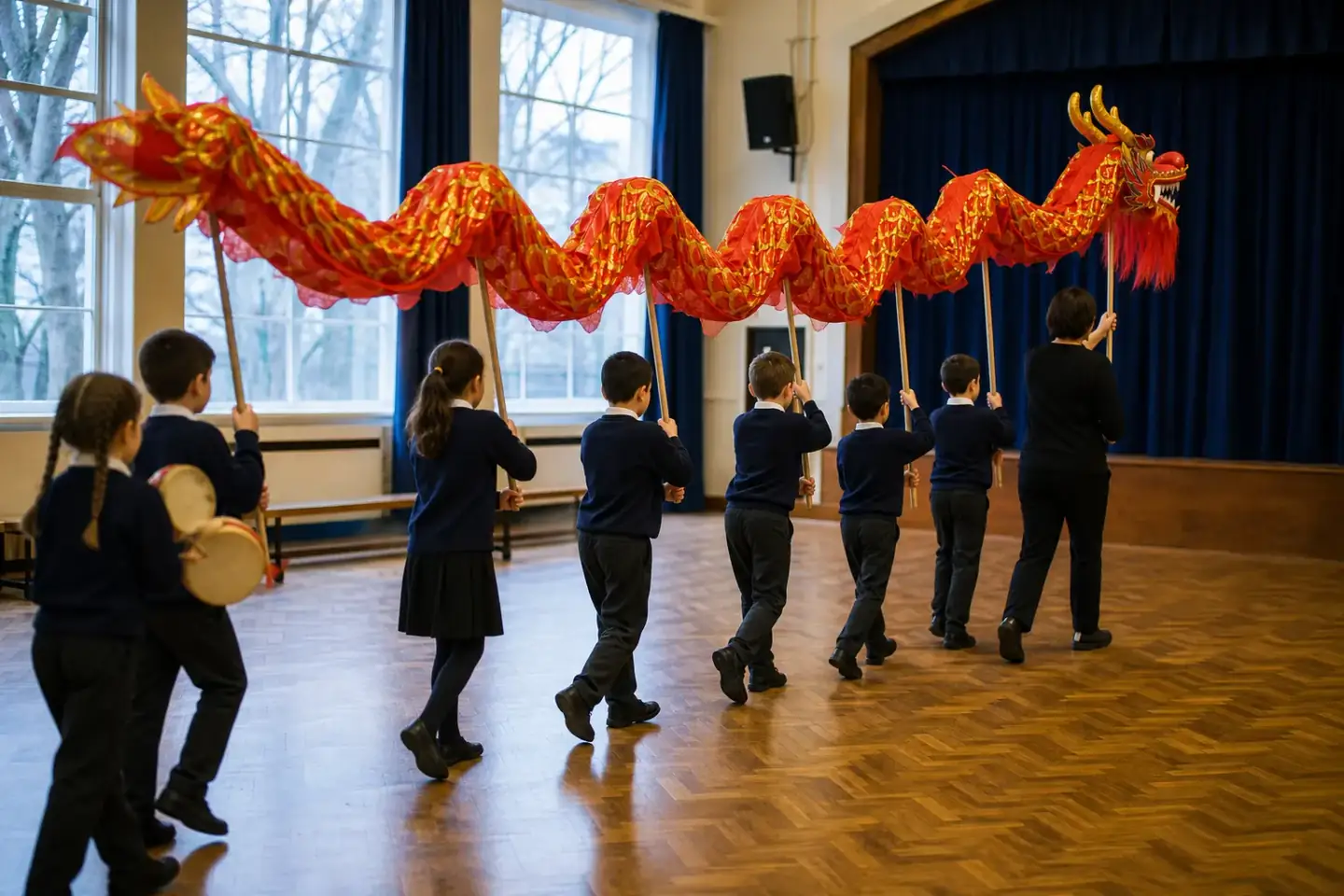 45–60 minutes per classChinese Dragon DanceStep into the vibrant traditions of Chinese culture with our exhilarating Chinese Dragon Dance workshop.See the session
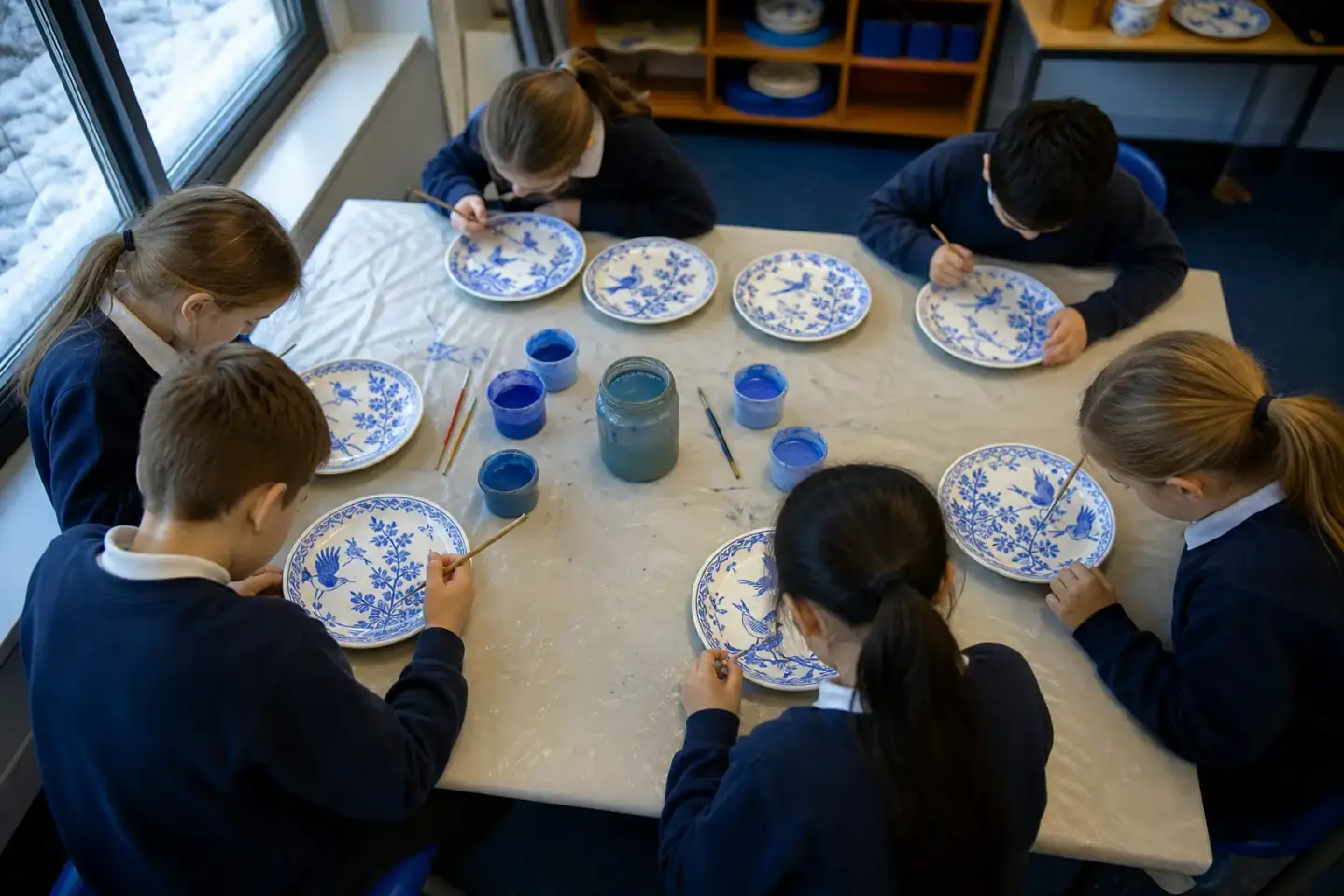 60–90 minutes per classChinese Plate PaintingEach child has the opportunity to create their own unique design.See the session
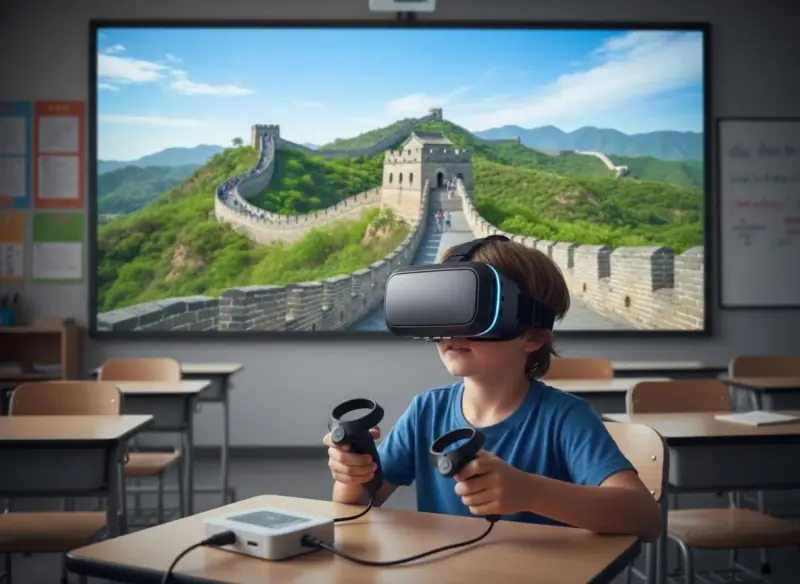 60 minutes per classAncient China in VRDiscover the twelve animals of the Zodiac and the story of the Great Race.See the session
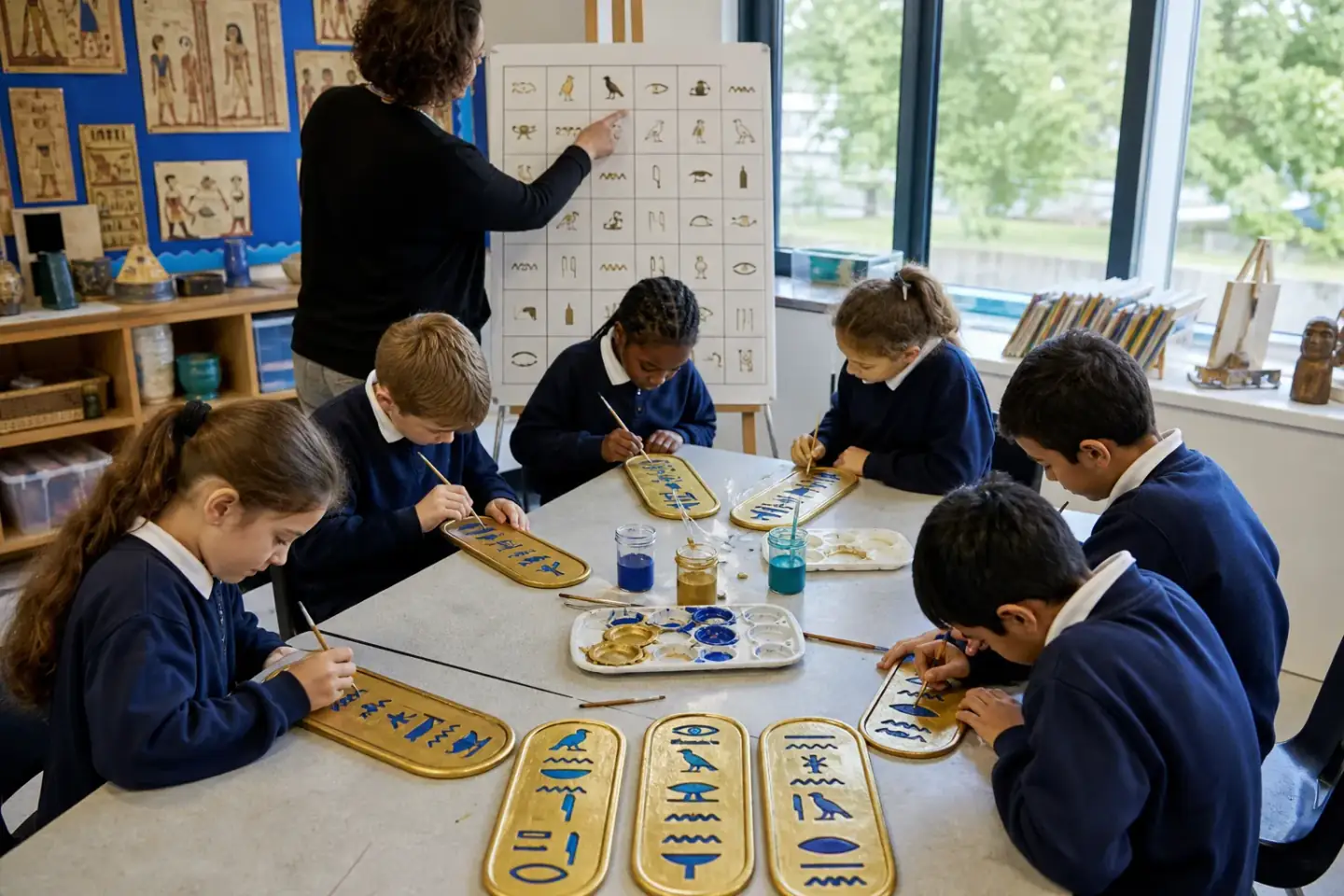 60–90 minutes per classEgyptian Cartouche PaintingHieroglyphic cartouches allow students to write their names like ancient Egyptian royalty.See the session
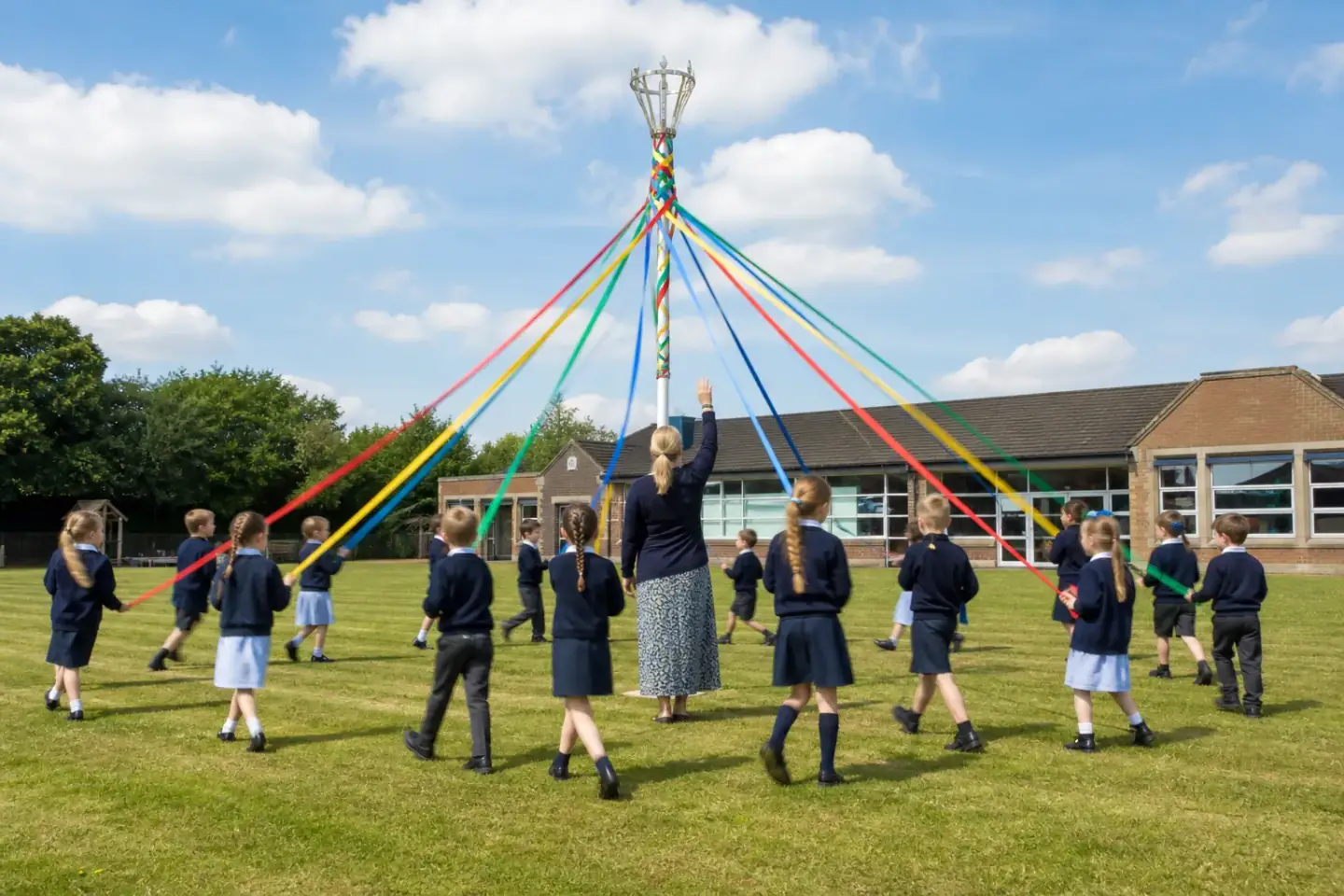 45–60 minutes per classMaypole DanceRibbons, weaving patterns and lively folk music.See the session
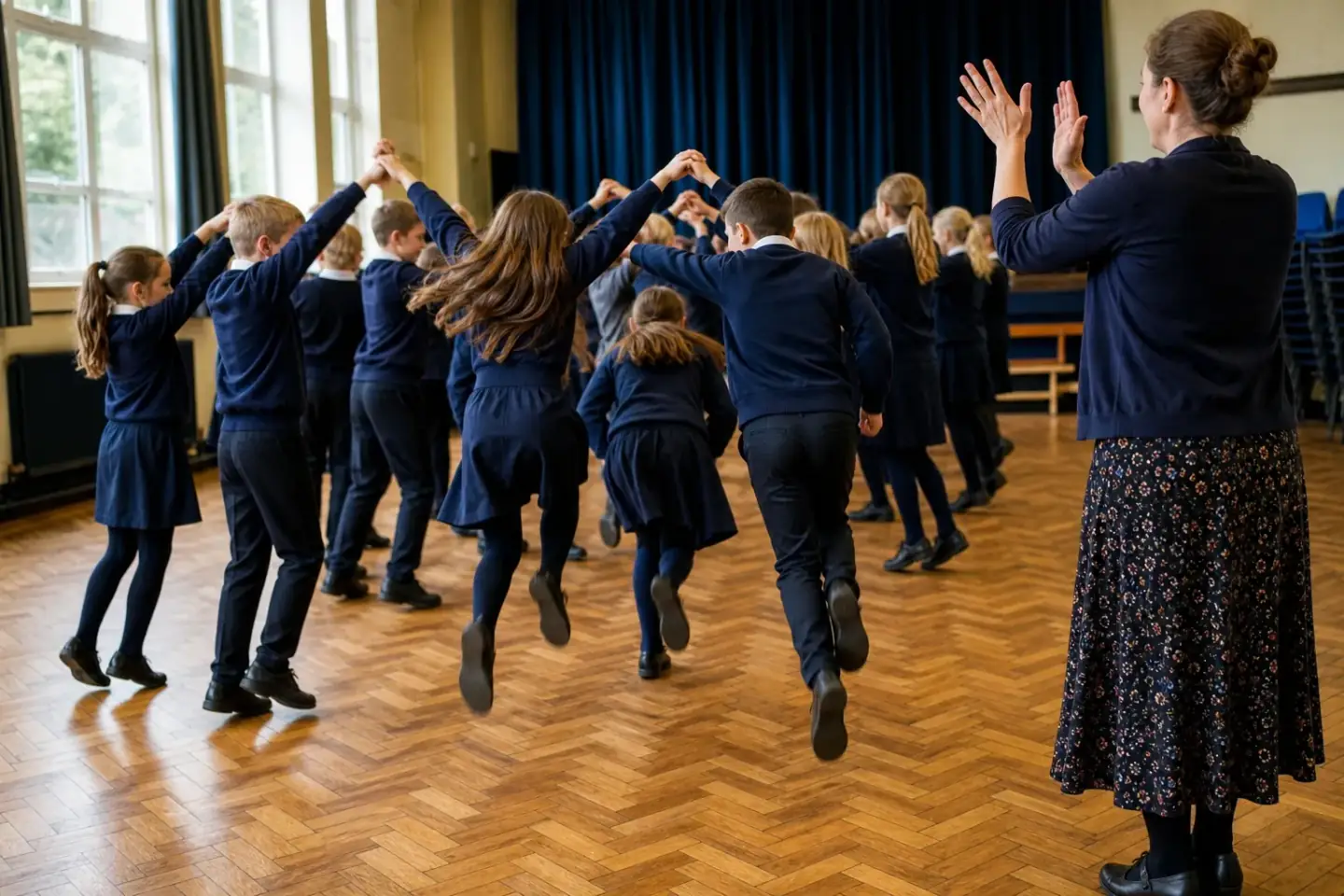 45–60 minutes per classIrish DanceOur Irish dance workshop brings the rhythm, footwork and heritage of Irish dance into your school.See the session
 60 minutes per classAncient Egypt in VRCairo and the pyramids, pharaohs and gods, mummification and the Book of the Dead.See the session
 60 minutes per classAncient Greece in VRThe Greek gods and the origins of the Olympics.See the session
 60 minutes per classIndigenous Australia in VRReal dances filmed in Far North Queensland, Australia.See the session
Express yourself through the graceful moves and rich traditions of Indian dance.
Tell us the date you have in mind and we'll come back within one working day with options for your school.